Lifting the Caesar Act:
08/12/25 07:07 Filed in: Syria
The Impact of the Caesar Act on the Economy and Investment
Since its implementation, the Caesar Act has imposed extensive restrictions on companies, banks, investors, and even governments engaging economically with Syria. The result has been:
Despite repeated discussions about easing sanctions, one fundamental truth remains clear for the business community: Investors will not enter a market under the threat of sanctions or legal uncertainty. Partial lifting or conditional waivers are not enough, as any clause or requirement could expose companies to penalties in the future. That uncertainty keeps regional and international investors on the sidelines.
A Complete Removal Could Open a New Chapter
If the Caesar Act is lifted fully and without conditions, it would signal:
The logistics and freight industry will be among the first sectors to benefit, as lifting sanctions would:
If the Caesar Act is lifted entirely and unconditionally, it will mark a real turning point for Syria’s economic recovery. It will encourage investors — both regional and international — to enter the Syrian market with renewed confidence. However, as long as the law remains in place, even partially or conditionally, investor hesitation will persist, delaying reconstruction and limiting economic revival.
Since its implementation, the Caesar Act has imposed extensive restrictions on companies, banks, investors, and even governments engaging economically with Syria. The result has been:
- Freezing major projects that were ready to launch.
- Investors avoiding the Syrian market entirely.
- A near-complete halt to reconstruction in critical sectors.
- Increased costs in shipping, insurance, and financial transactions.
Despite repeated discussions about easing sanctions, one fundamental truth remains clear for the business community: Investors will not enter a market under the threat of sanctions or legal uncertainty. Partial lifting or conditional waivers are not enough, as any clause or requirement could expose companies to penalties in the future. That uncertainty keeps regional and international investors on the sidelines.
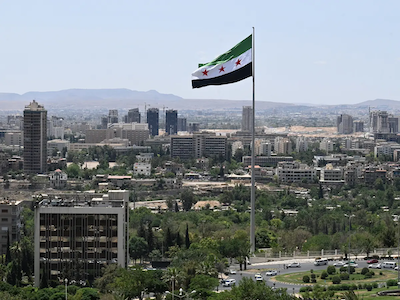
A Complete Removal Could Open a New Chapter
If the Caesar Act is lifted fully and without conditions, it would signal:
- The return of regional and international corporations to major projects.
- Capital inflows into construction, energy, infrastructure, logistics, and services.
- Normalization of operations for airlines, insurers, and financial institutions.
- Resumption of infrastructure and real-estate projects that have been on hold for years.
- A strong boost for logistics and freight companies — including MIDTRANS — to operate freely without legal or operational risks.
The logistics and freight industry will be among the first sectors to benefit, as lifting sanctions would:
- Ease the movement of goods from Europe, China, the Gulf, and the Americas.
- Reduce insurance premiums and operational risks.
- Accelerate the flow of equipment and materials needed for reconstruction.
If the Caesar Act is lifted entirely and unconditionally, it will mark a real turning point for Syria’s economic recovery. It will encourage investors — both regional and international — to enter the Syrian market with renewed confidence. However, as long as the law remains in place, even partially or conditionally, investor hesitation will persist, delaying reconstruction and limiting economic revival.